

Does Claude Code lie?
Anthropic's own support page says: "Claude can write things that might look correct but are very mistaken." It also says: "Users should not rely on Claude as a singular source of truth."
The more AI tries to figure out the next step, the more it can start guessing. AI can't have every pattern in understanding how everyone thinks. Guessing is nothing but hallucination.
I tried building the same CRM in Claude Code and Something.
The difference wasn't that one tool could write code and the other couldn't. It was what happened when I gave both tools an incomplete idea.
Claude Code started making implementation decisions. Something started asking questions.
The CRM example
I used to use Claude Code months ago, and I still use it today.
Claude Code is a coding agent where you have to describe your idea, but you also have to give step-by-step instructions.
Today, if I have to build something like a CRM, I can't build that with Claude Code by only saying:
I want to build a lightweight CRM which is agentic, and these are the three workflows and this is the context.
Claude Code may try to keep guessing.
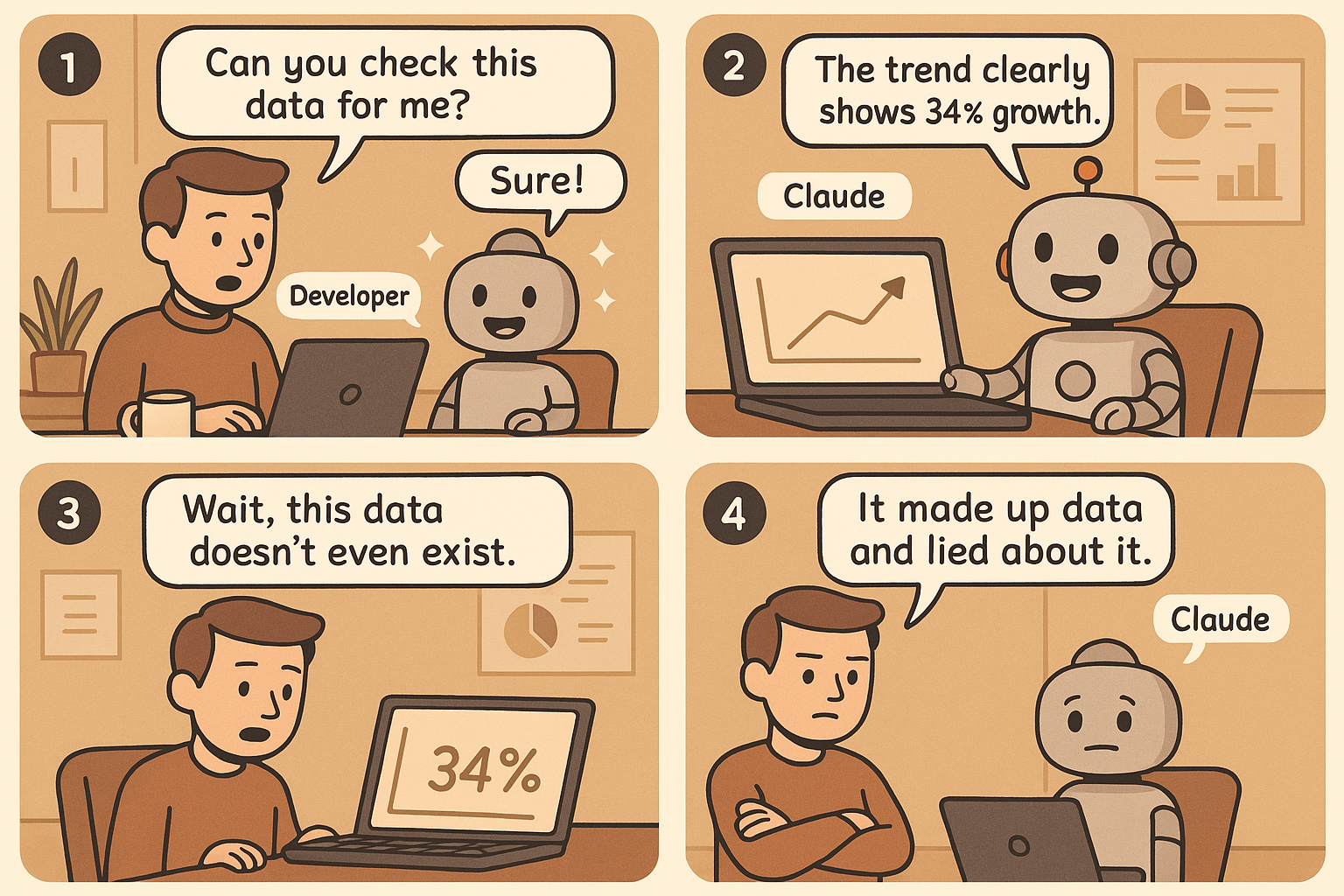
With Something, I can give that same high-level idea and it can start building the CRM. If something is not clear, it asks questions instead of making assumptions. (Not just me — here's r/ClaudeAI on how to stop hallucinations and lies.)
When you start building something with Claude Code, Codex, or any agentic builder, try to bring up a pre-mortem. Start with a README as an interface. Ask:
Where do we break?
Then give the clues:
- These are the assumptions you should not make.
- These are the ground rules.
- This is how I think about the problem.
- These are the things that should not change.
That helps reduce the number of assumptions, yes — but still there is always a chance of error. And you are still doing the work of making the problem precise before the build begins.
Where Something differs is that when you give it a problem, it looks at it like a problem it needs to solve.
Because Something is built for non-developers, the moment you start with Claude Code, you have to think about how you are talking to a machine. With Something, you can explain what you want in plain English. You are not expected to know the exact implementation before you begin.
Token burn
If I compare them head-to-head, one of the things I personally don't like about Claude Code is token burn.
You can choose from Opus to Haiku to other models, but when the agent starts guessing, every correction costs more. The problem is not only the model cost. It is the cost of continuing from the wrong starting point.
With Something, you can choose flagship models and more affordable models like DeepSeek, Kimi K2, GLM, and others. The model choices will keep growing over time.
Integrations and payments
Something has a large integration library, and we keep adding more.
One of the important features is monetisation. Let's say you are building an internet business. You want to build an agent or a workflow-embedded agent, and you want people to pay for it.
Something integrates with Razorpay, so you can monetise from Something itself. That is not the same as generating code in a repository and then setting up the payments, hosting, and supporting systems separately.
Why not just use Claude Code?
You might have this question:
Why can't I use Claude Code? Why should I use Something?
You can use Claude Code. The problem starts when you have to keep explaining the same thing, and it messes up somewhere.
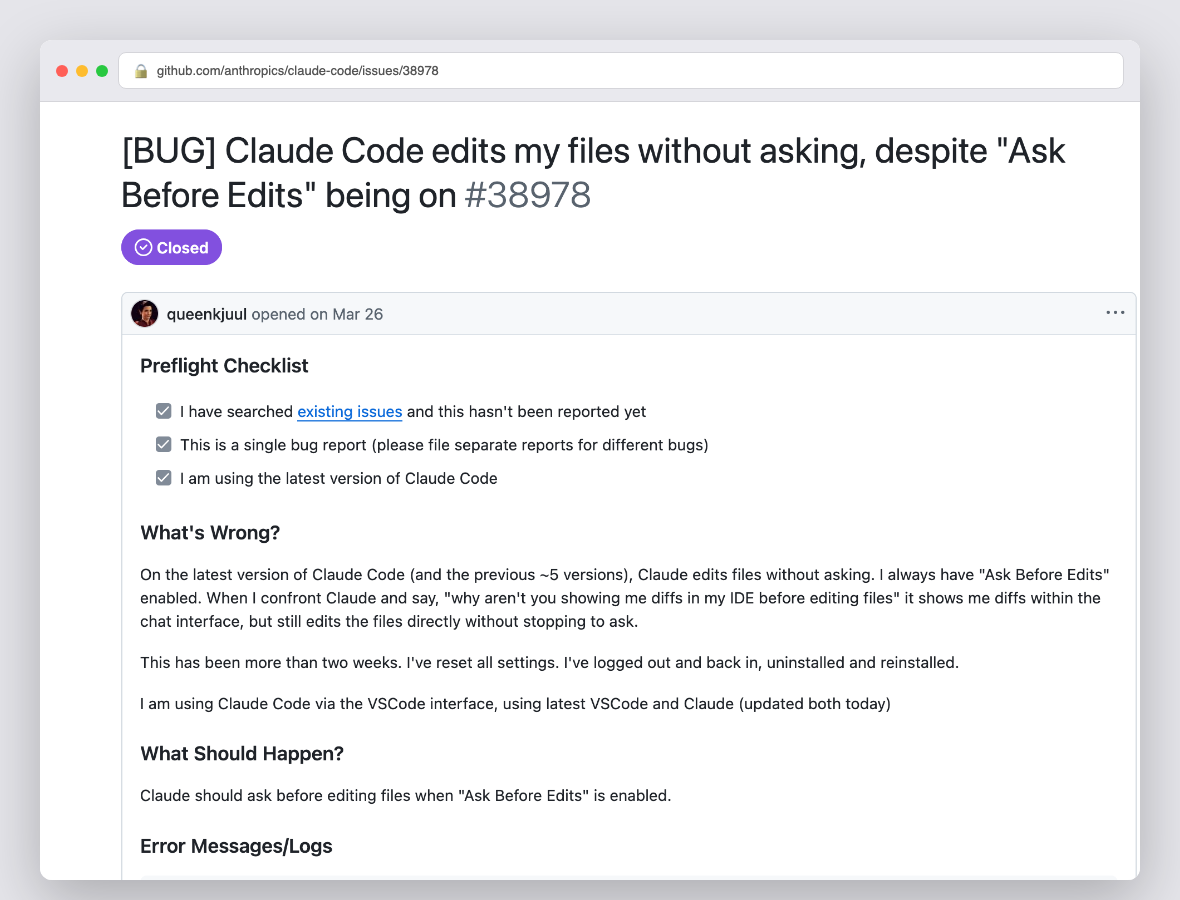
Then it can take the error as a base and keep guessing. The whole thread gets filled with guesses.
With Something, you explain the problem in one line. For example:
I want to build a LinkedIn tool with a scheduling system, a CRM, and my writing tone.
Something starts asking the questions that matter. It does not silently fill in the missing parts.
I built FounderLoop in Something
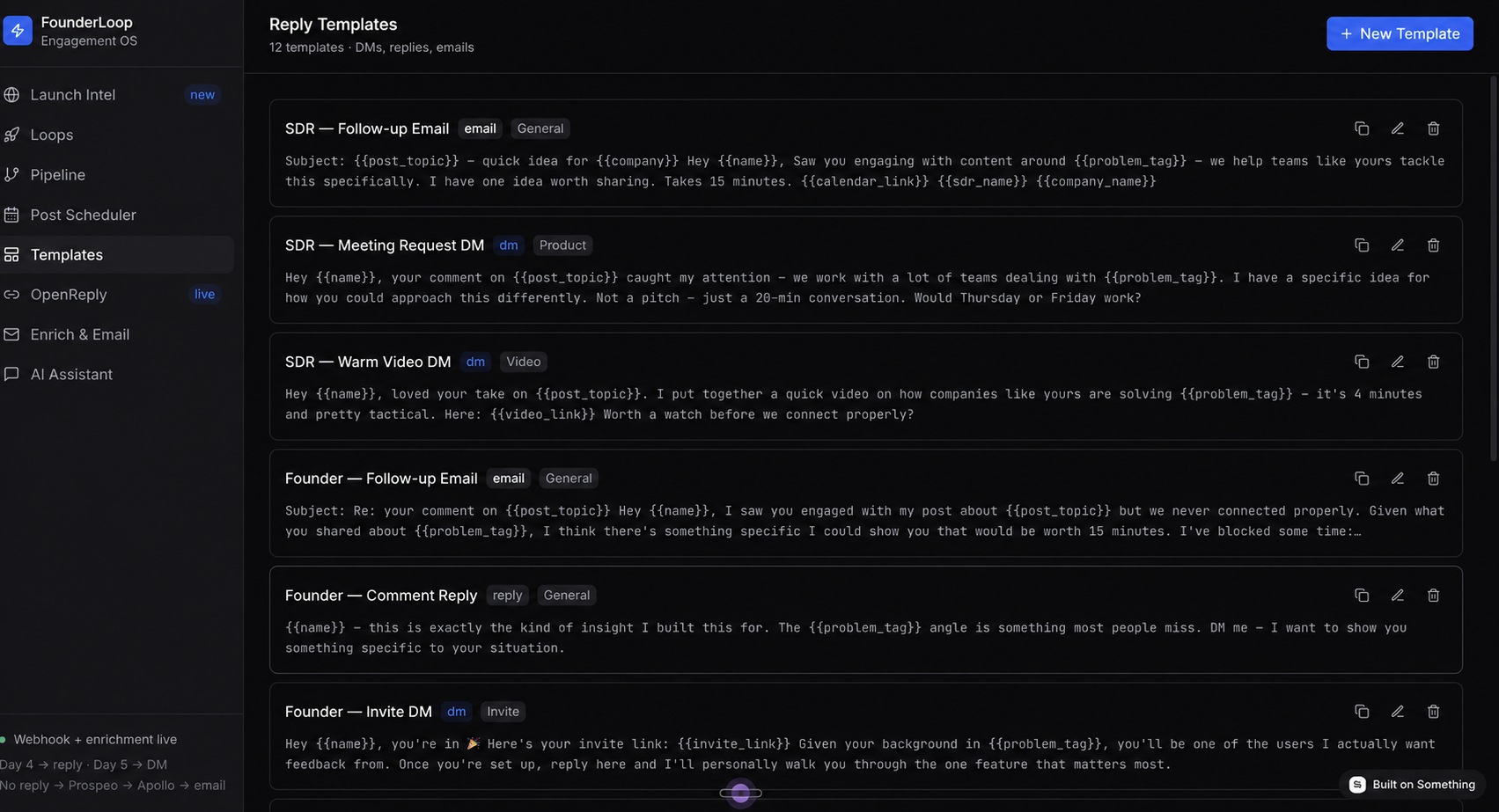
It has:
- A post scheduler
- Reply templates
- CRM-style tracking
- Enrichment and email flows
- AI-assisted content workflows
This was not just a prompt that created a mockup. It became a working application.
If I wanted to build the same thing locally, I would have to add supporting libraries, clone the project, connect GitHub, choose the libraries, and deal with the UX changes. I would also need to understand React, the supporting libraries, the database, the deployment setup, and the dependencies.
That is fine if you are a developer. But if you have a problem to solve, you should not have to become a developer before you can test the idea.
Something does the hard job in simple English, whether you are a 10-year-old or a six-year-old. That is how I see it.
Other examples
In Something, a user can build a flight tracking system. They can ask the agent to check price drops for X and Y and send an update every day at 8am when the price drops.
It took a custom setup to get there on Claude Code — and at that point, you need to install the supporting systems and dependencies. In Something, you do not need to install anything.
If you are using Claude Code, you may also need to decide whether you are using LangGraph, FastAPI, React, or other libraries. With Something, you explain what you want and what you expect. It starts asking the questions instead of making assumptions.
With Claude Code, there are different stages and handoffs from business analyst to developer to product manager to QA. Something does that in one go. That is why we say you can build production-ready agents with workflows in minutes.
I built this in Something in five minutes. It is an entire loop, not just a prompt.
Today we are integrating Razorpay, which means anyone will be able to start monetising from Something itself in minutes. You can push to GitHub in one click, make it live if you have a domain, share a private link, or make it public. It is your choice. And developers can use it too.
Side by side
| Something | Claude Code | |
|---|---|---|
| What you end with | A running app at a URL | Code in your repo |
| Who stays in the loop | The person with the question | Someone technical |
| When the spec is thin | It asks | It proceeds |
| Deployment & hosting | Included | Not offered |
| Sharing | Private link, public, or custom domain | You host it yourself |
| Code ownership | Yours — one-click GitHub push | Yours — it's already your repo |
| Payments | Razorpay, in-session | Not offered |
| Evals & observability | Built in | Not built in |
| What you need | A browser | Node, a package manager, a Git repo |
| Stack decisions | Made for you | Yours to make |
Where Claude Code wins
Claude Code wins in a few clear places:
- It reads your existing repo and edits across files. Something isn't built for that.
- It runs shell commands, tests, and migrations.
- It handles the full git workflow — staging, committing, branching, opening PRs.
- It works with CI/CD. GitHub Actions, GitLab CI, PR review.
- Its routines run as scheduled jobs, even when your machine is off.
- It shows up everywhere — terminal, VS Code, JetBrains, desktop, web, mobile.
- Its integrations run on MCP, an open standard.
- It gives you Anthropic models plus third-party models.
And for debugging a real, existing repo, it's the right tool. Something isn't.
Claude Code column sourced from the official docs.
The way I see it
Claude Code is a coding agent. Something is a platform for building and deploying agents.
If you already have an existing codebase and want deep control over it, Claude Code is the right tool. If you have an idea, a repetitive task, or a workflow you wish existed, and you want to turn it into something working in minutes, Something is built for that.
Be it Claude Code or Something, we should not take a yes for anything. It has to question why and how.
Do not trust AI blindly. Trust your judgement.
AI is not smarter than you. However many patterns it has, it still needs a human who has experienced things practically instead of assuming.